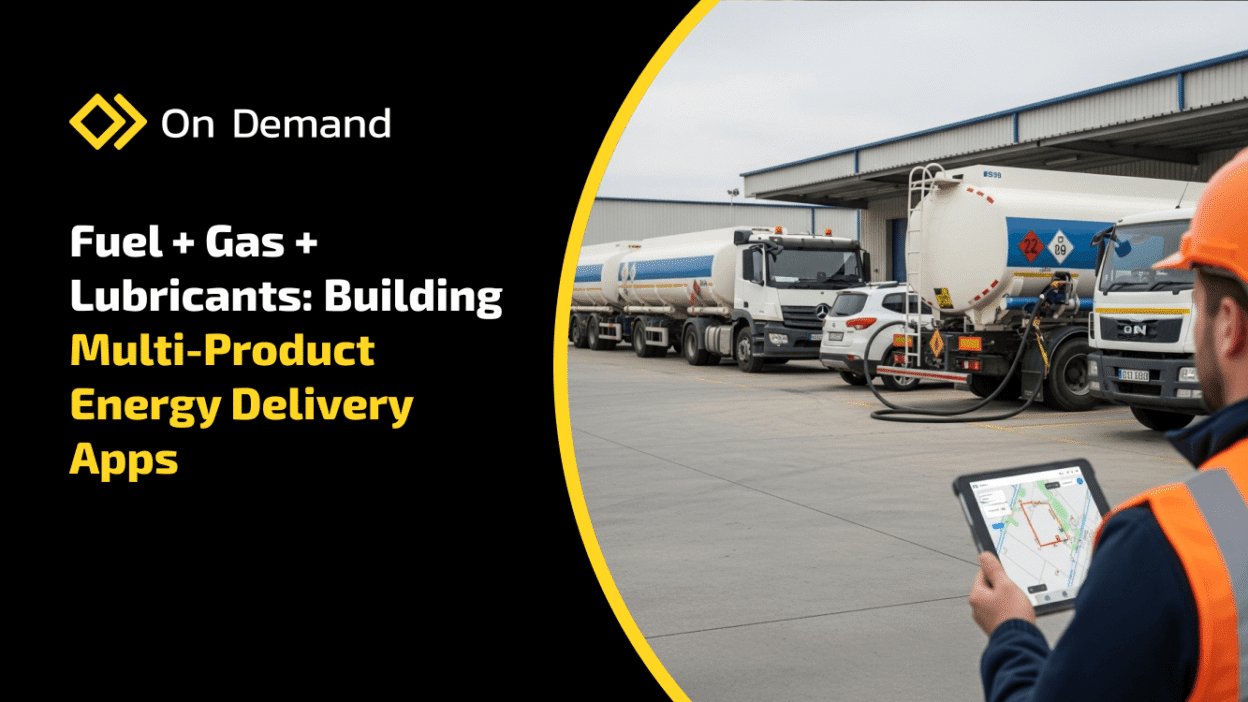
Think about the last time a fleet manager or a hardware store owner needed to restock. They needed diesel for their vehicles, LPG cylinders for the workshop, and engine oil for machinery, from three different suppliers, through three separate phone calls. That’s not just an inconvenience. That’s a multimillion-dollar business gap waiting to be closed by the right on-demand fuel delivery app that goes beyond a single product.
The global fuel delivery market is already booming, but the next wave of disruption belongs to entrepreneurs and energy distributors who build a multi-product energy delivery app, one platform combining fuel, gas, and lubricants into a seamless, digital-first experience. In this guide, we break down the market opportunity, the core features your platform needs, the tech stack behind it, and how a white-label solution can get you live in days, not months.
Why Multi-Product Energy Delivery Is a Billion-Dollar Opportunity
The fuel delivery market has already proven that the on-demand model works. Startups and established distributors across Asia, the Middle East, and North America have built successful fuel delivery startups delivering petrol and diesel directly to vehicles and job sites. But here’s what most platforms miss: the same customers who need fuel also need LPG and lubricants- and they’re still buying those products the old-fashioned way.
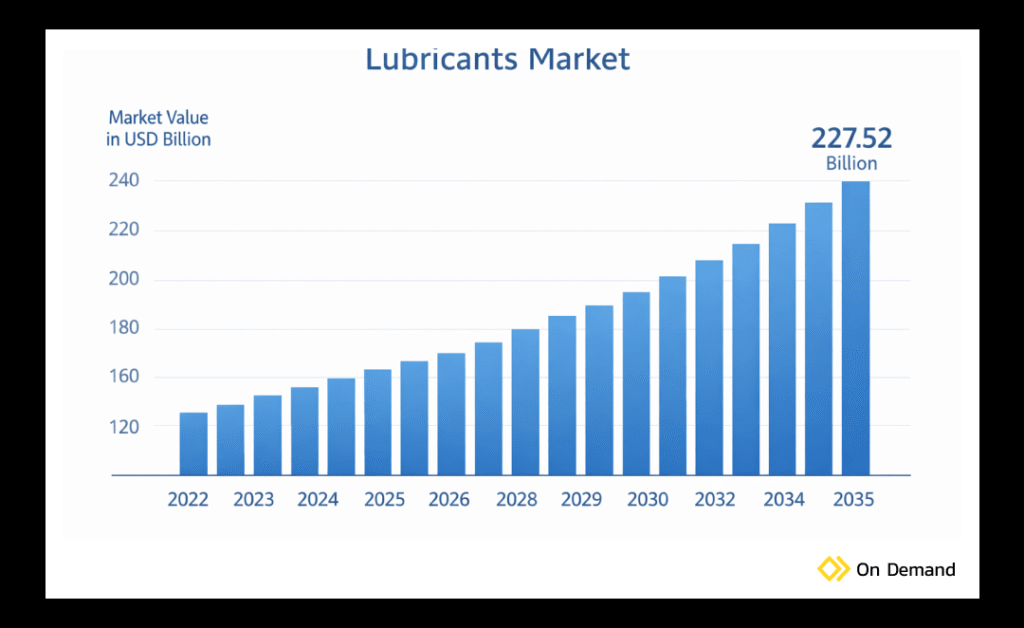
According to Market Research Future, the global lubricants market was valued at USD 133 billion in 2024 and is projected to reach USD 227.52 billion by 2035, growing at a CAGR of 5%. The LPG market adds another USD 123 billion to the equation. Together, these segments represent a total addressable market of hundreds of billions, most still served through offline, fragmented channels.
For an on-demand entrepreneur, a platform that unifies fuel, gas, and lubricant delivery improves user experience dramatically, and increases average order value, customer lifetime value, and revenue per delivery process. A customer ordering diesel who also places an LPG cylinder and engine oil order creates a run that is three times more profitable than a single-product dispatch.
The Three Product Pillars: What Your Platform Must Cover
Before diving into features and tech, let’s define the three core product categories that make a complete multi-product energy delivery platform.
1. Fuel Delivery (Petrol & Diesel)
This is your anchor category. A fully featured on-demand fuel delivery app enables customers -fleet operators, construction sites, farms, or individual car owners-to order petrol or diesel directly to their location. Core capabilities include real-time tracking of the delivery tanker, GPS location pinning for drop-off, scheduled delivery slots, digital metering, and regulatory compliance management for fuel transport permits and fuel truck driver credentials.
2. Gas & LPG Cylinder Delivery
An LPG cylinder delivery app module handles one of the highest-frequency recurring orders in energy distribution. Restaurants, households, industrial kitchens, and auto-gas stations are the primary customers. The platform must manage cylinder inventory, deposit-and-return workflows, cylinder size variants (5 kg, 12 kg, 45 kg commercial), and subscription-based repeat ordering. High-frequency ordering drives app engagement and improves customer experience metrics and retention rates.
3. Lubricants & Engine Oils
A lubricant delivery platform serves automotive workshops, fleet management companies, industrial machinery operators, and retail distributors. Products span engine oils, transmission fluids, brake fluids, and industrial greases. App features like product specification filtering, OEM-specific oil matching, bulk-order discounts, and predictive reorder reminders based on vehicle mileage cycles make this a high-value, low-competition vertical within most on-demand mobile app delivery markets.
Core Features Every Multi-Product Energy App Must Have
A bundled energy platform isn’t just three apps stitched together. The competitive advantage lies in shared infrastructure, cross-product intelligence, and a user experience that feels seamlessly unified. Here are the non-negotiable core features of a successful multi-product energy delivery app:
| Feature | Why It Matters |
| Unified Customer Profile & Digital Wallet | Single login, shared wallet across all product categories. Supports digital wallets, cards, and UPI. Reduces friction and encourages cross-product purchases. |
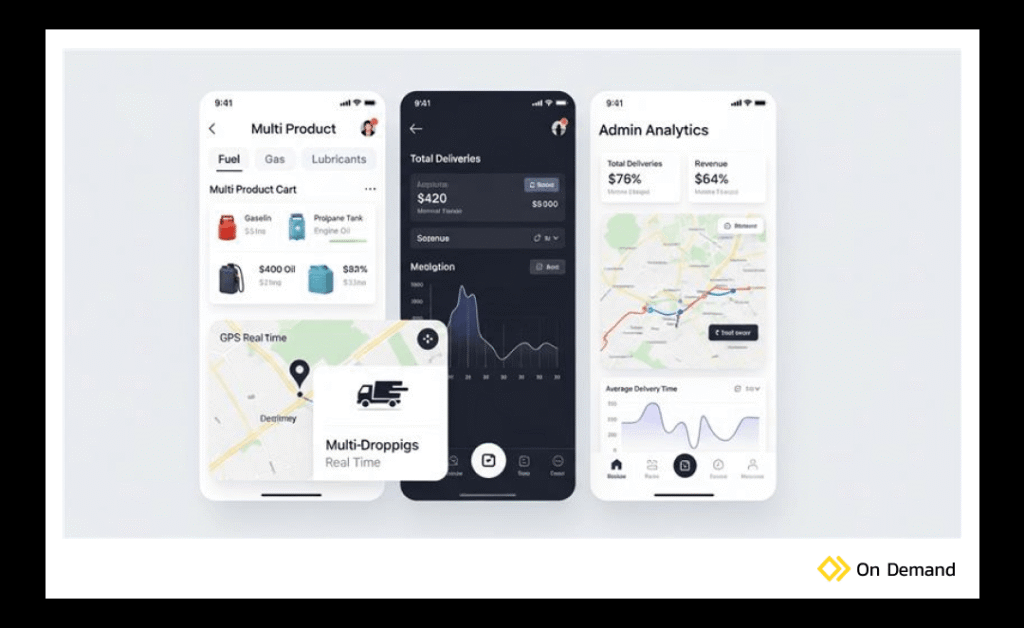
| Multi-Product Cart & Checkout | Customers order diesel, LPG cylinder, and engine oil in one transaction — single checkout, single invoice. The defining differentiator of bundled vs. single-product apps. |
| Real-Time Delivery Tracking | Live GPS map view for customers and dispatchers across all delivery types. Real-time tracking is the top feature cited in fuel delivery app user reviews. |
| Route Optimization Engine | AI-powered route optimization batches multi-product deliveries intelligently, maximizing daily delivery capacity and minimizing operational cost. |
| Regulatory Compliance Module | Driver and vehicle credential dashboards, digital dispatch logs, hazardous materials permits, and e-signature proof of delivery built in — not bolted on. |
| Subscription & Repeat Orders | Weekly LPG refills, monthly lubricant deliveries, and scheduled fleet fuel-ups via subscriptions maximize LTV and make revenue predictable. |
| Analytics Dashboard | Real-time analytics dashboards tracking revenue by product, driver performance, and SLA compliance. Prevents SLA breaches and informs expansion decisions. |
| Driver App with Multi-Product Manifest | Purpose-built driver app with multi-product order details, route sequences, quantity confirmation, and digital dispatch logs for compliance. |
| Payment Gateways Integration | Multiple payment options: cards, digital wallets, net banking, and B2B invoice billing. Support for major payment gateways (Stripe, Razorpay, PayFort) out of the box. |
| IoT Sensors & Smart Metering | IoT integration with fuel dispensing equipment and tank level sensors enables automated re-order triggers, accurate billing, and theft prevention for enterprise clients. |
Real-World Business Models That Win With Bundled Energy Delivery
The best way to understand the potential of a multi-product platform is to see who benefits most from it:
Regional Energy Distributors
A petrol distribution company already delivering diesel to farms and construction sites is the ideal expansion candidate. Their existing customer relationships and logistics infrastructure make adding LPG and lubricants to a shared on-demand fuel delivery platform a low-cost, high-return move. If you are evaluating the right solution for a regional energy distributor, the right multi-product platform gives them one branded app for all three products, all compliance, and all customer billing.
Fleet Management Companies
Truck fleets, taxi aggregators, and logistics businesses need regular fuel top-ups, periodic oil changes, and occasional LPG refills for auxiliary equipment. A white-label energy delivery solution offered as a B2B SaaS product to fleet management clients creates a recurring subscription revenue stream on top of per-delivery margins. Platforms like dispatching and scheduling software show how real-time scheduling, GPS oversight, and job-completion tracking can be layered on top of delivery operations -giving fleet managers full visibility across every run.
Construction & Industrial Sites
Large construction sites consume diesel for generators and heavy machinery, LPG for welding and heating, and multiple lubricant grades for equipment maintenance. A single procurement app covering all three positions positions your platform as an enterprise-grade supply chain tool.
Grocery & Multi-Delivery Startups
Entrepreneurs already running a grocery delivery platform can extend into energy products for rural and semi-urban markets. Bundling LPG with daily grocery deliveries is a proven model across Southeast Asia and Africa, dramatically increasing order frequency and basket size — and turning a low-margin grocery run into a high-value multi-product order.
Fuel Delivery Startups Looking to Scale
Existing on-demand fuel delivery startups can add lubricants and gas as product lines within their existing Fuel Delivery App, reaching more revenue from the same customer base. Your existing drivers, logistics network, and customers are already there. The platform just needs to support additional fuel types and product categories.
Tech Stack: What Powers a Scalable Energy Delivery Platform
Understanding the tech stack is critical when evaluating custom development versus a white-label solution. Here are the key technical layers every On-Demand Fuel Delivery App needs:
- Native iOS and Android Mobile Apps: Separate, purpose-built apps for customers, delivery drivers, and administrators. The customer app handles browsing, ordering, real-time tracking, and payment. The driver app manages order manifests, route navigation, digital proof of delivery, and compliance logging.
- Cloud Solutions & Backend Technologies: Cloud-based backend infrastructure (AWS, GCP, or Azure) handling order processing, inventory management, user authentication, and push notifications. Microservices architecture allows each product module (fuel, gas, lubricants) to scale independently.
- Real-Time GPS Integration: Google Maps API or Mapbox integration for real-time GPS tracking, route optimisation, and delivery ETA calculation. Core infrastructure for the customer trust that drives retention.
- Payment Gateways: Integration with leading payment gateways (Stripe, PayFort, Razorpay) supporting multiple payment options — cards, digital wallets, bank transfers, and B2B invoice billing.
- IoT Integration Layer: APIs connecting to IoT sensors on fuel storage tanks, LPG cylinder tracking systems, and vehicle telematics. Enables automated stock alerts, theft detection, and predictive analytics for demand forecasting.
- Predictive Analytics Engine: Built-in analytics dashboards with predictive analytics for demand forecasting. Flag when a specific area is likely to see a surge in LPG orders during winter, or a spike in lubricant demand during the monsoon season.
- Security Protocols & User Roles: Encrypted data storage, role-based access control (user roles for admin, driver, dispatcher, customer), digital dispatch logs for regulatory audits, and security protocols compliant with local fuel and LPG transport regulations.
Building these layers from scratch is a significant undertaking. Teams planning a custom build should closely evaluate the complexity of IoT development as a standalone investment before deciding between a custom build and a white-label platform.
Why a White-Label Platform Is the Smartest Starting Point
Custom-building a multi-product energy delivery app from scratch typically takes 9-18 months and costs hundreds of thousands of dollars. That timeline includes building the customer app, driver app, admin dashboard, backend APIs, payment gateways integration, real-time GPS integration, compliance modules, IoT integration, and the analytics layer, all for a product that hasn’t yet proven market fit.
A white-label energy delivery solution changes the equation entirely. Our fuel delivery app platform is pre-built, compliance-ready, and fully customizable. Key advantages include:
- Complete Code Authority: Full source code handover, you control every update, every feature addition, and every market-specific customization.
- Ready in 48 Hours: Single-product deployments go live in as little as 48 hours. Multi-product configurations available on request.
- Built-In Compliance Features: Driver and vehicle credential dashboards, digital dispatch logs, e-signature proof of delivery, and safety regulations compliance are already built in.
- Multi-Panel Architecture: Separate apps for customers, delivery drivers, and administrators. Each panel is optimised for its user’s workflow.
- Scalable Cloud-Based Foundation: Start with fuel and add gas or lubricants as independent modules without rebuilding the platform.
Our pharmacy delivery platform is a strong reference for how regulated product delivery (controlled substances, prescription verification) can be handled with compliance native to the app -a model that applies directly to hazardous materials management in fuel and LPG delivery.
The same real-time dispatch and routing logic used across logistics and transportation platforms translates directly into fuel tanker and LPG delivery workflows -the underlying technology is identical, only the product and compliance layer changes.
Cost Estimation: Build vs. Buy
Founders entering the energy delivery market frequently ask for cost estimation data. Here’s a realistic comparison:
| Approach | Estimated Cost & Timeline |
| Custom Development (Full Build) | USD 80,000 – 200,000+ | 9-18 months | High risk, no proven template |
| White-Label (Single Product) | USD 5,000 – 15,000 | 48 hours – 2 weeks | Pre-built, compliance-ready |
| White-Label (Multi-Product) | USD 12,000 – 30,000 | 2-6 weeks | Full product suite, modular expansion |
| Open-Source + Customization | USD 20,000 – 60,000 | 4-8 months | Limited fuel/LPG features, heavy rework needed |
Monetisation Strategies for Multi-Product Energy Platforms
A bundled platform opens revenue streams that single-product apps simply cannot access:
- Delivery Fee Per Category: Charge separate or blended delivery fees based on product type, order size, and distance. Combine into a single ‘energy delivery’ fee for bundled orders.
- Subscription Plans for Recurring Orders: Monthly or quarterly subscriptions for LPG refills, scheduled fleet fuel-ups, and lubricant maintenance packages convert one-time customers into predictable recurring revenue.
- B2B Volume Contracts: Platform analytics identify high-volume commercial customers. Offer negotiated annual supply contracts billed automatically through the app with integrated invoice generation. For enterprise clients, pairing this with a dedicated invoicing tool like Clarro strengthens the billing workflow.
- White-Label Licensing: License your proven regional platform to energy distributors in other cities as a SaaS product – turning your delivery business into a software business.
- In-App Partner Placements: Lubricant brands, automotive accessory companies, and fuel card providers can pay for featured placement to reach your verified energy buyer audience – with no ads in our platform products, this applies to B2B partner integrations.
Your Launch Roadmap: How to Get Started
Whether you’re a regional distributor going digital or a startup founder entering this space, here is a practical launch sequence:
- Start with your anchor product; most successful multi-product platforms begin with either fuel or LPG, build customer trust, then expand to additional product lines.
- Define your platform scope before committing to a codebase.MVP Consulting Sеrvicеs helps you decide what to build, what to configure, and what to defer — so you land on a modular white-label platform where adding a new product category is a configuration change, not a rebuild.
- Identify your first target customer segment: B2C residential LPG delivery, B2B fleet fuel supply, or industrial lubricant distribution. Each has different marketing and operations playbooks.
- Build regulatory compliance from day one. Fuel transport, LPG cylinder handling, and hazardous materials regulations vary by market. Your platform must support digital dispatch logs, driver and vehicle credential dashboards, and e-signature proof of delivery before launch.
- Secure supply chain agreements before going live. The app is only as reliable as the supply chain behind it.
- Launch, review your analytics dashboard, then expand. Use your first 90 days of data to understand which products your customers want, which delivery time slots drive the highest order volume, and where your operational bottlenecks are before adding new categories.
- Use predictive analytics for inventory planning. As your platform matures, seasonal demand patterns for LPG (winter), lubricants (monsoon), and fuel (harvest season) can be predicted and prepared for in advance.
Conclusion
The energy delivery market is at an inflection point. Customers -both consumer and commercial- expect the same on-demand convenience they get from food and grocery delivery to extend to energy products. The businesses that build multi-product energy delivery apps now will define the fuel industry category for the next decade.
Combining on-demand fuel delivery, gas station replenishment, and lubricant distribution into a single Fuel Delivery App is not just a better product; it’s a fundamentally better business. Higher average order values, stronger customer support capabilities, reduced logistics cost per delivery, and multiple monetization streams make it the logical evolution beyond single-product platforms.
Whether you are starting with a single product or launching a full three-category platform from day one, the right white-label foundation gets you there faster and at a fraction of custom development cost. The technology, the compliance framework, and the multi-product architecture are already built; all that’s left is putting your brand on it and going live.
If you found this guide useful, our blog covers the full spectrum of on-demand delivery solutions – from logistics and fleet management to grocery, pharmacy, and beyond. Explore what’s possible for your next platform below.
Continue Your Journey
Building a multi-product energy delivery platform is just the beginning. To succeed, you need the right strategy, scalable technology, and a clear understanding of compliance and operations. Whether you’re starting fresh or expanding an existing fuel delivery business, having the right foundation can make all the difference.
Explore how to plan, build, and scale your solution with our detailed guide on on-demand app development.
Frequently Asked Questions:
1. What is a multi-product energy delivery app, and how is it different from a standard fuel delivery app?
A multi-product energy delivery app combines fuel, LPG, and lubricants in one platform, allowing users to order multiple products in a single transaction. Unlike standard fuel apps, it supports different delivery types and built-in compliance for each product.
2. How much does it cost to build a multi-product energy delivery app?
A custom-built app can cost $80K–$200K and take 9–18 months. A white-label solution typically costs $12K–$30K and can be launched within 2–6 weeks, depending on features and integrations.
3. What are the most important features to include in a fuel and LPG delivery app at launch?
Essential features include real-time GPS tracking, multi-product checkout, customer and driver apps, compliance management, and payment integration. LPG requires deposit tracking, while fuel delivery needs accurate digital metering.
4. Can an existing fuel delivery business add LPG and lubricants to its current app?
Yes, if the platform is built on a modular architecture. Otherwise, adding new product categories may require significant redevelopment or migration to a more flexible system.
5. How do you handle regulatory compliance for fuel and LPG delivery in an app?
Compliance is managed through modules that handle driver certifications, permits, digital logs, metering accuracy, and proof of delivery using e-signatures and audit trails.