What if you could run your fuel delivery, car wash, and vehicle servicing business from a single branded app, without building three separate products, managing three separate teams, or losing customers every time they switch between platforms?
That is not a future possibility. It is what the fastest-growing vehicle service operators are doing right now, and the gap between them and their competitors is widening every quarter.
The vehicle services industry sits at a rare convergence point. Fuel delivery is being digitized at scale. The on-demand car wash market was valued at over USD 23.8 billion in 2026. Vehicle maintenance, oil changes, detailing, and tyre checks are rapidly shifting from physical service centres to on-demand, app-first models.
The problem most operators face is not a shortage of opportunity. It is fragmentation. A fuel delivery platform on one system, a car wash booking app on another, and vehicle maintenance managed through manual calls or spreadsheets. Every gap between those touchpoints is a place where a customer quietly disappears.
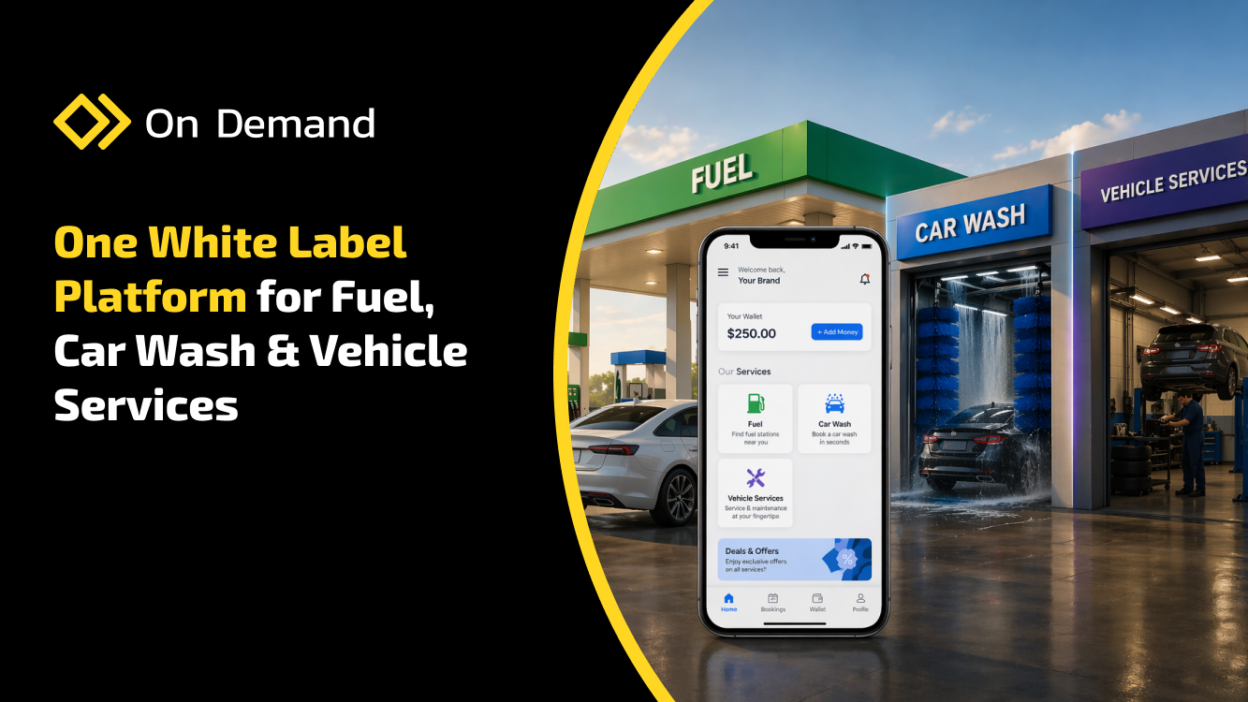
A white-label platform for fuel and car wash services, built as a unified vehicle ecosystem, closes every one of those gaps. This blog covers the architecture, the advanced features, the monetisation logic, and exactly who should be building on this model today.
Why the Vehicle Services Industry Needs a Unified Platform
Think about a vehicle owner’s week. Fuel needs topping up. The car is overdue for a wash. An oil change has been delayed for two months. In 2026, they expect to handle all of that from one app.
Operators who deliver that experience build a compounding customer relationship. A fuel delivery customer naturally becomes a car wash customer. A car wash customer books a detailing service. That is not upselling, it is the behaviour of a customer who trusts one platform with their entire vehicle care routine.
The Real Cost of Running Three Separate Apps
Fragmentation costs more than most operators realise. Three platforms mean three licensing fees, three admin dashboards, three separate customer journeys with no shared data and no cross-selling. A customer who uses your fuel app but books a car wash through a competitor is a lost revenue opportunity that never even appears in your analytics.
A single-on-demand fuel delivery platform integrated with car wash and vehicle service modules does not just reduce operational complexity; it actively creates revenue channels that disconnected systems structurally cannot produce.
How a Vehicle Ecosystem Approach Multiplies Revenue
A customer who uses your fuel delivery service weekly generates a certain amount of revenue annually. That same customer, booking two car washes a month and a quarterly vehicle service, is worth two to three times more, without a single additional pound spent on acquisition.
The case for combining fuel delivery and car wash services on a single platform is well-validated. Operators who offer bundled services within a single delivery app consistently report higher customer lifetime value, lower churn, and stronger referral rates. This is not convenience design; it is deliberate revenue architecture.
The Architecture of a Unified Vehicle Ecosystem
Most people hear “white label app” and picture a single interface. A production-grade white-label vehicle services platform is a synchronised three-tier ecosystem. Understanding each tier is essential before evaluating any platform.
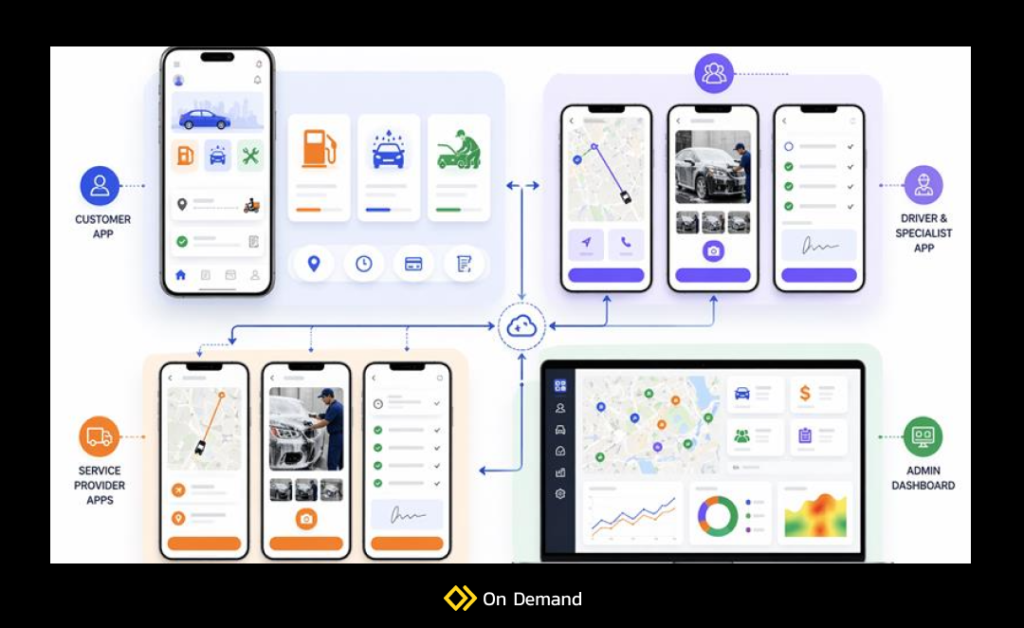
Tier 1: The Customer App
This is the branded face of your business. Customers toggle between fuel delivery, car wash booking, and vehicle maintenance from one clean interface. They manage their vehicle profile, track orders in real time, store payment methods, and access their full service history, all within your brand identity. A customer requests fuel, gets a live ETA, receives a digital receipt, and then books a car wash for the same afternoon. That frictionless flow is what drives platform stickiness.
Tier 2: The Driver and Specialist App
The operational backbone customers never see but entirely depend on. Fuel delivery drivers, mobile car washers, and vehicle service specialists each work from a purpose-built interface handling job assignment, real-time navigation, digital proof of service (photos, customer signatures, meter readings), and earnings tracking. Every completed job feeds data upstream, route times, service quality scores, and geographic coverage, giving the admin layer the information it needs to optimise continuously.
Tier 3: The Admin Dashboard
The command centre. A live, map-based view of every active job, every provider, and every customer request across all three service verticals simultaneously. Business owners monitor fleet movement, track earnings by service category, identify high-demand zones through heat maps, manage pricing rules, and generate compliance reports. all from one login.
Beyond speed to market, this three-tier architecture delivers technical resilience. A codebase that has already handled thousands of live transactions means your Day 1 is as stable as an established competitor’s Year 5.
Advanced Features That Drive 2X Operational Efficiency
A standard booking app is table stakes in 2025. To compete meaningfully, the platform needs features that are genuinely difficult to replicate with manual operations or disconnected tools.
Geofencing and Proximity Triggers
When a fuel truck or mobile car washer enters a defined geographic zone, the platform automatically sends push notifications to nearby customers. A customer who was not planning a wash today becomes an impulse booking when they see a washer is 800 metres away with a 30-minute slot. This feature alone meaningfully increases booking volume without increasing marketing spend.
AI-Driven Route Optimisation
By intelligently batching nearby orders and dynamically rerouting around traffic and regulatory boundaries, the platform can reduce mileage per delivery run by up to 20%. Across a fleet operating daily, that saving compounds into a significant annual cost reduction, and faster deliveries produce higher customer satisfaction scores.
Dynamic Pricing
Peak-hour fuel delivery, emergency roadside assistance, and same-day detailing slots command a premium that customers will pay when the value is clear. Dynamic pricing, managed from the admin panel, ensures operators capture that margin without manual intervention.
IoT-Based Automated Tank Monitoring
For B2B clients, construction sites, logistics fleets, and hospital generators, the platform integrates with IoT sensors in fuel tanks, monitoring levels in real time and dispatching automatically when a threshold is reached. The operator becomes an operational dependency for their commercial clients, making churn nearly impossible.
For operators managing detailing and vehicle servicing alongside standard services, auto detailing service management software handles job categorization, team specialization, and client tracking at the level of granularity that growing businesses require.
Security and Compliance: Built for a Regulated Industry
Fuel delivery is not a standard on-demand category. It operates within strict legal frameworks that must be addressed at the architecture level.
PCI-DSS Payment Security
Every transaction, fuel purchase, car wash booking, and vehicle maintenance must be processed through a PCI-DSS-compliant gateway. This protects customer card data and shields the operator from breach liability.
ADR and Hazmat Compliance Logic
Transporting fuel requires adherence to ADR regulations or equivalent local Hazmat rules. A compliant platform builds these requirements — zone restrictions, load limits, documentation- directly into dispatch logic so drivers cannot be assigned jobs that create regulatory exposure.
Digital Audit Trails
Every delivery is time-stamped, geo-tagged, and documented with volume dispensed, driver identity, and customer confirmation. In regulated markets, this is a legal requirement that protects operators during audits and disputes.
For gas station owners and fuel distributors evaluating platform compliance in detail, the white-label fuel delivery software guide for gas stations covers regulatory considerations specific to fuel distribution.
Sustainability: Green Features That Win Modern Customers
Environmental credentials are increasingly expected by urban and corporate customers, not just valued.
- Waterless Car Wash Services
Waterless wash technology uses less than one litre of biodegradable solution per vehicle versus 150+ litres in a traditional wash. Platforms routing and dispatching waterless specialists access a customer segment that actively pays a premium for eco-friendly services.
- Carbon Offset Integration
Some fuel delivery platforms now offer customers the option to offset the carbon footprint of their delivery at checkout, a micro-transaction that generates meaningful loyalty signals, particularly among fleet operators with ESG reporting requirements.
- EV Charging as a Natural Extension
Platforms integrating EV charging station location and booking alongside traditional fuel delivery are building a position that survives the energy transition. Operators on this model hold the customer relationship through that shift rather than losing it to a new entrant.
Monetization: How Your Platform Generates ROI
This is the question every serious operator asks before committing to a platform. A unified on-demand fuel and car wash app is a multi-channel revenue engine.
Service Commissions
Take a percentage of every transaction completed by third-party car wash providers or vehicle service specialists on your platform. This model scales with volume and carries minimal fixed cost.
Delivery Fees
Flat or distance-based charges on each fuel delivery. The most predictable revenue stream is particularly for B2B fleet contracts, where delivery frequency is consistent.
Subscription Memberships
“Gold” or “Premium” tiers offering one free wash per month, priority fuel delivery windows, and discounted vehicle services for a monthly fee. Subscription revenue provides cash flow predictability and dramatically improves retention rates.
In-App Promotions
Local tyre shops, auto insurers, and car accessory retailers pay for placement within your Vehicle Services tab. As your user base grows, this advertising inventory becomes a passive revenue stream requiring no additional operational investment.
For operators who need the broadest flexibility to build and extend these revenue streams, custom on-demand app solutions provide full codebase ownership alongside a readymade foundation — enabling every monetization model to be configured precisely as the business requires.
Working with an experienced car wash app development company that also covers fuel delivery helps ensure the revenue architecture is implemented correctly from day one.
Success Metrics: KPIs to Track After Launch
The right platform generates the data needed to improve operations continuously. These are the KPIs that indicate the platform is working as intended.
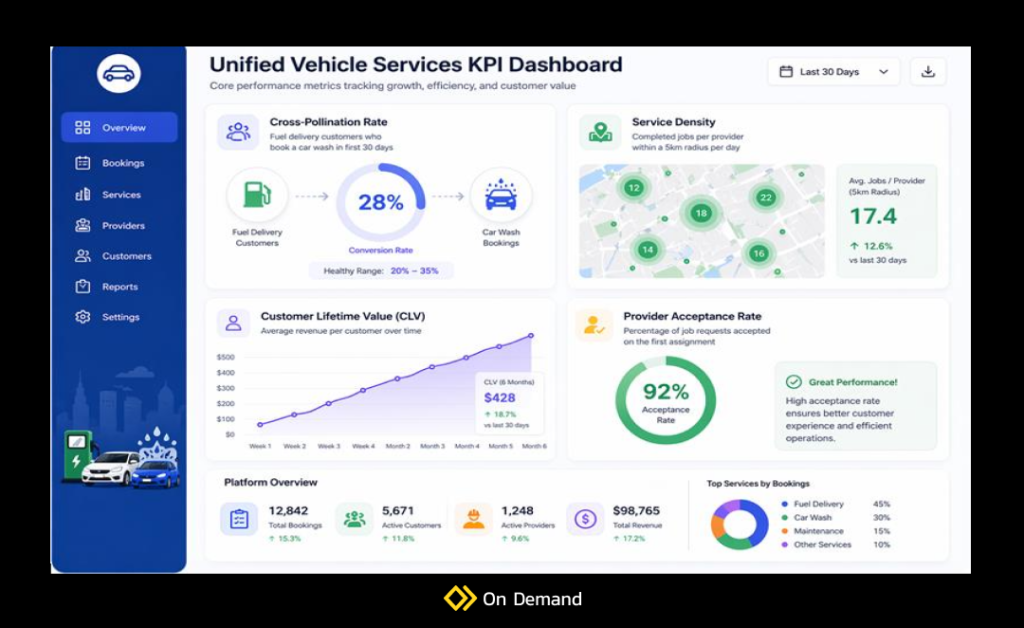
Core KPIs to measure performance in a unified vehicle services platform
Cross-Pollination Rate: The percentage of fuel delivery customers who book a car wash within their first 30 days. A healthy rate, typically 20 to 35% in mature markets, indicates that your service integration and cross-sell triggers are working.
Service Density: Completed jobs per provider within a 5km radius per day. Higher density means providers are working efficiently, and routing logic is performing correctly.
Customer Lifetime Value (CLV): The shift from a one-time user to a monthly subscriber is the clearest indicator of platform health. Tracking CLV by service entry point reveals which vertical produces the highest-value long-term customers.
Provider Acceptance Rate: The percentage of job requests accepted on the first assignment. A low rate signals provider-side issues, earnings, job distance, and documentation burden that limit growth before they are addressed.
Who Should Use a Unified Vehicle Services Platform?
Fuel delivery startups want to differentiate from day one. Launching with car wash and vehicle maintenance alongside fuel delivery positions them immediately as a full-service provider.
Existing car wash businesses are ready to grow revenue without building new infrastructure. Adding on-demand fuel delivery creates a compelling bundle that increases average order value with the same customer base.
Gas station owners and fuel distributors are extending their brand into the on-demand economy. A branded platform transforms a location-dependent business into a scalable, mobile-first operation.
Fleet and B2B service providers managing fuel, washing, and maintenance for corporate accounts. A unified platform dramatically simplifies the operational and invoicing complexity across all three service categories.
Multi-service automotive entrepreneurs who see the vehicle ecosystem opportunity and want to capture the entire vehicle care relationship, not a single transaction within it.
Conclusion: Ready to Own the Vehicle Service Market in Your City?
Your customers are already using their phones to book fuel, find car washes, and schedule maintenance. The question is whether they are doing it through your platform or a competitor’s.
A unified white-label platform for fuel, car wash, and vehicle services is available today; it can be live in 48 hours under your brand, and every day without it is a day of cross-sell revenue, customer data, and lifetime value going elsewhere.
Whether you are a fuel distributor looking to digitize, a car wash operator ready to scale, or an entrepreneur building the next category leader in vehicle care, the platform is ready.
Frequently Asked Questions:
1. Can one white-label app genuinely manage fuel delivery, car wash, and vehicle services simultaneously?
Yes. Each service vertical runs its own booking flow, provider logic, and compliance framework while sharing a unified customer profile, payment gateway, and admin dashboard. The customer experiences one seamless app. The operator manages one coherent backend. The architecture is designed specifically to handle simultaneous multi-service operations.
2. How is a white-label platform different from building a custom app from scratch?
A white-label platform launches in 48 hours under your brand. Custom development takes three to six months and typically costs $25,000 to $100,000 or more. Most operators start with a white-label foundation for speed to market and introduce custom development as their requirements become specific enough to justify the investment.
3. What compliance requirements apply specifically to fuel delivery?
Fuel delivery operates within ADR or Hazmat regulations, depending on the market, requiring zone restrictions, load limits, and documentation built into dispatch logic. PCI-DSS payment compliance is non-negotiable for all transactions. Every delivery must produce a digital audit trail — time-stamped, geo-tagged, and volume-verified — for regulatory and dispute purposes.
4. What monetization models work best for a multi-service vehicle platform at launch?
Delivery fees and service commissions provide the most immediate and predictable revenue at launch. Subscription memberships should follow once a consistent active user base exists — typically after 90 to 120 days. In-app advertising becomes viable once monthly active users reach a threshold that makes placement genuinely valuable for local advertisers.
5. How quickly can the platform launch, and what ongoing support should I expect?
A standard readymade white-label vehicle services configuration, branded, payment-integrated, and geographically configured, can be live in 48 hours. More complex setups with custom modules or compliance integrations typically require one to two weeks. After launch, look for providers with dedicated technical support, scheduled feature updates, and clear SLA commitments on downtime, especially critical for fuel delivery, where platform outages carry operational and regulatory consequences.