
Posted At: Nov 14, 2025 - 544 Views
10 minutes to read
Implementation, Security & Real-World Success Strategies
Welcome to Part 2 of our comprehensive guide on white-label beauty apps! In Part 1, we explored the five core challenges facing beauty businesses and how white-label solutions solve them—from automated scheduling to marketing automation. We saw data showing 45-60% reductions in no-shows, 70% decreases in administrative time, and potential for 10-15x ROI.
Now it's time to get practical. In Part 2, we'll dive into the critical implementation considerations that separate successful deployments from failed investments: security protocols, vendor selection, data migration strategies, and real-world case studies that demonstrate these solutions in action.
Data Security and Privacy: Protecting Customer Information
In today's digital landscape, data security isn't just a technical concern; it's a fundamental trust issue that can make or break your business reputation. When customers share their personal information, payment details, and service preferences with your white label beauty app, they're trusting you to keep that information safe.
Critical Security Features to Look For
End-to-End Encryption: All customer data should be encrypted both during transmission (when information travels between the app and servers) and at rest (when stored in databases). This means even if someone intercepts the data, they can't read it without the encryption keys.
PCI-DSS Compliance for Payments: Any app handling credit card information must comply with Payment Card Industry Data Security Standards. Reputable white label providers integrate with certified payment processors like Stripe or Square that handle sensitive payment data, so you never directly store credit card numbers on your servers.
GDPR and Privacy Law Compliance: Depending on where your customers are located, you may need to comply with data protection regulations like GDPR (Europe), CCPA (California), or similar laws. Your white label solution should include features for obtaining customer consent, allowing data access requests, and enabling customers to delete their information if requested.
Regular Security Audits: Choose providers who conduct regular third-party security audits and penetration testing to identify and fix vulnerabilities before they can be exploited.
Role-Based Access Controls: Not every staff member needs access to all customer data. The system should allow you to set different permission levels—for example, front desk staff might see booking information but not full payment history.
Automatic Backups: Daily automated backups ensure that even if something goes catastrophically wrong, you can restore customer data without losing critical information.
What to Ask Potential Vendors
When evaluating white label providers, ask specific questions about their security practices:
- How is customer data encrypted?
- Where are servers physically located?
- What certifications do they hold (ISO 27001, SOC 2, etc.)?
- What happens if there's a data breach?
- How often do they update security protocols?
- Can they provide documentation of their security practices?
Remember, a data breach doesn't just cost money in fines and remediation—it destroys customer trust that takes years to rebuild. Investing in a white label solution with robust security features protects both your customers and your business reputation.
Scalability: Growing Without Technology Limitations
One of the biggest advantages of a well-designed white label mobile app is its ability to grow with your business. Unlike custom-built solutions that might require expensive redevelopment as you expand, or paper-based systems that completely break down at scale, quality white label platforms are designed to handle growth seamlessly.
Handling Increased User Volume
As your customer base grows from hundreds to thousands, your app infrastructure needs to maintain fast performance. Cloud-based white label solutions automatically scale server resources during peak booking times (like weekend mornings or before holidays) and scale back during slower periods, ensuring customers never experience lag or crashes while keeping your costs efficient.
Adding New Locations
If you expand from one salon to multiple locations, your white label app should easily accommodate this growth. Customers should be able to view and book at any location from a single app, while you maintain centralized management with location-specific analytics. The system should handle different staff rosters, service menus, and pricing at each location without requiring separate apps.
Expanding Service Offerings
Maybe you start with basic haircuts and color but later add nail services, facials, massage therapy, or retail products. Your white label platform should make it simple to add new service categories, adjust pricing, update descriptions, and train staff on new booking procedures without technical complications.
Increasing Staff Size
As you hire more stylists, estheticians, or other service providers, the system should accommodate unlimited staff profiles without performance degradation. Each team member should have their own login, schedule, and performance dashboard.
Growing Transaction Volume
Your payment processing infrastructure needs to handle increased transaction volume as the business grows. Quality white label solutions partner with enterprise-grade payment processors that can handle thousands of transactions daily without hiccups.
International Expansion
If you plan to expand to multiple countries or serve international customers, look for white label solutions that support multiple currencies, languages, and regional payment methods. The app should automatically display the appropriate currency and language based on the customer's location.
Future Feature Integration
As new technologies emerge—augmented reality try-ons, AI-powered recommendations, voice booking, or integration with smart home devices—your white label provider should have a clear roadmap for adding these capabilities without requiring you to switch platforms.
The key question to ask: "If my business doubles or triples in size over the next three years, can this platform handle that growth without major overhauls or migrations?" Reputable vendors should be able to provide case studies of clients who've successfully scaled on their platform.
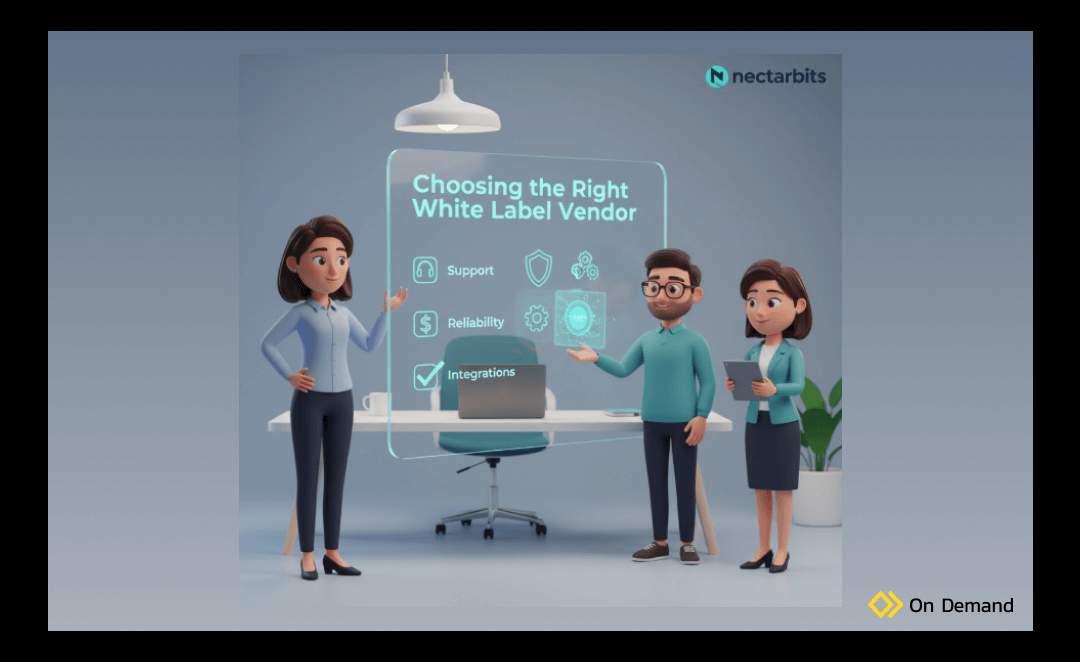
Choosing the Right White Label Vendor: Critical Selection Criteria
Not all white label solutions are created equal. The difference between a great implementation that transforms your business and a frustrating experience that wastes money often comes down to choosing the right vendor partner.
Essential Vendor Selection Criteria
Industry Experience and Reputation: Look for vendors who specialize in beauty and wellness businesses rather than generic booking systems. They'll understand industry-specific needs like service duration variability, product inventory management, and commission structures. Check online reviews, ask for client references, and look for case studies from businesses similar to yours.
Customer Support Quality: When something goes wrong—and eventually something always does—responsive, knowledgeable support makes the difference between a minor hiccup and a business-crippling disaster. Ask about support availability (24/7 or business hours only?), response time commitments, and whether support is included in your subscription or costs extra. Test their responsiveness before signing contracts by asking pre-sales questions and noting how quickly and thoroughly they respond.
Uptime Guarantees and Reliability: Your booking system is mission-critical infrastructure. If the app goes down, customers can't book appointments, and your business effectively stops. Look for vendors offering 99.9% uptime guarantees backed by Service Level Agreements (SLAs) that compensate you if they fail to meet reliability standards. Ask about their server infrastructure, backup systems, and disaster recovery plans.
Clear Feature Roadmap: Technology evolves rapidly. Your vendor should have a transparent roadmap showing planned feature additions and improvements over the next 12-24 months. This demonstrates they're investing in platform development rather than maintaining a stagnant product. Ask how they incorporate customer feedback into development priorities.
Transparent Pricing Structure: Hidden fees and unexpected costs destroy budgets and trust. Get complete pricing documentation, including setup fees, monthly subscriptions, transaction fees, additional user charges, feature upgrade costs, and contract termination terms. Watch out for vendors who quote attractively low monthly fees but charge hefty transaction percentages that become expensive as your business grows.
Customization Flexibility: While it's "white label," some providers offer more customization than others. Can you fully customize colors, fonts, and layouts to match your brand? Can you add custom features specific to your business model? What requires additional development fees versus what's included in standard customization?
Training and Onboarding Support: The best technology is useless if your team doesn't know how to use it effectively. Quality vendors provide comprehensive training for your staff, detailed documentation, video tutorials, and ongoing educational resources. Ask what training is included in your package and what ongoing support looks like.
Contract Flexibility: Technology needs change. Look for vendors offering reasonable contract terms—ideally, month-to-month or annual agreements rather than multi-year lock-ins that trap you with underperforming solutions. Understand cancellation policies and data export capabilities if you ever need to switch providers.
Integration Ecosystem: Your white label app needs to work harmoniously with other business tools. Verify that the platform integrates with your existing point-of-sale system, accounting software, email marketing platform, and any other critical business tools. Pre-built integrations are vastly preferable to custom integration projects.
When deciding between building from scratch or using a pre-built solution, understanding the custom vs white label app developmentt trade-offs helps make informed decisions aligned with your budget, timeline, and business goals.
White Label vs. Third-Party Marketplace Apps: Making the Right Choice
When exploring digital solutions for your beauty business, you'll encounter two primary options: branded white label apps and third-party marketplace platforms like StyleSeat, Fresha, or Vagaro. Understanding the fundamental differences helps you make the right strategic choice for your business.
Third-Party Marketplace Platforms
These platforms aggregate multiple beauty professionals and businesses in a single app where customers can discover, compare, and book services. Think of them like Uber for beauty services—customers use one app to access many providers.
Advantages:
- Built-in customer discovery (people browsing the platform might discover your business)
- Minimal setup effort
- Usually, lower upfront costs
- You can start accepting bookings immediately
Disadvantages:
- You're competing directly with other businesses in the same platform
- Limited branding opportunities (customers remember the platform, not your business)
- Commission fees on every booking (typically 10-25%)
- Restricted control over customer data and relationships
- You're building the platform's brand rather than your own
Branded White Label Apps
These solutions create an app exclusively for your business, branded with your name, logo, and identity. Customers download your app specifically to book with your business.
Advantages:
- Complete brand control and recognition
- Direct customer relationships without intermediaries
- No per-booking commission fees (just flat subscription costs)
- Full access to customer data for marketing and analysis
- Competitive differentiation from businesses using generic platforms
Disadvantages:
- Higher upfront investment
- You're responsible for driving customers to download your specific app
- Implementation requires more planning and effort
Which Should You Choose?
The decision depends on your business stage and strategy:
Choose third-party marketplaces if:
- You're a solo practitioner or a very small business just starting
- You have a minimal existing customer base and need discovery
- You want to test digital booking with minimal investment
- You're not ready to invest in building your own brand identity
Choose a white label app if:
- You have an established business with an existing customer base
- You want to build long-term brand equity and customer loyalty
- You book enough appointments that marketplace commission fees exceed white label subscription costs (usually 30+ appointments monthly)
- You want complete control over customer experience and data
- You're serious about growing a recognizable business brand
Many successful beauty businesses start with marketplace platforms to build initial clientele, then graduate to branded white label apps once they've established themselves. Some use both simultaneously—marketplace platforms for customer acquisition and branded apps for retention and loyalty.
The key insight: marketplace platforms help you get started quickly but limit long-term growth potential. White label apps require more upfront investment but position you for sustainable, brand-driven growth. Consider where you want your business to be in 3-5 years, not just where it is today.
Offline Functionality: Staying Operational When Connectivity Fails
While we live in an increasingly connected world, internet connectivity isn't always reliable—especially for mobile beauty professionals traveling to client locations or salons in areas with spotty service. Quality white label beauty app solutions should include offline functionality to ensure business continuity regardless of connectivity.
Critical Offline Capabilities
Viewing Scheduled Appointments: Staff should be able to view their daily schedule, client information, and service details even without an internet connection. The app syncs schedule data when connected and stores it locally for offline access.
Recording Services Completed: Service providers should be able to mark appointments as completed, add notes about services performed, and record product usage even offline. This information automatically syncs to central servers once connectivity is restored.
Accessing Customer History: Staff need to view previous services, preferences, allergies, and other critical customer information during appointments, even if the internet fails. Offline access to recent customer profiles ensures consistent service quality.
Basic Client Communication: While real-time messaging requires connectivity, the app should queue messages sent while offline and deliver them automatically when the connection is restored.
Payment Processing Considerations: While offline credit card processing has security implications, the app should store transaction details offline and process payments once connectivity returns. For mobile service providers, enabling offline mode for cash or check payments with later reconciliation prevents lost revenue.
Conflict Resolution: When the app syncs after offline usage, conflicts can occur if multiple staff members modified the same data offline. Quality white label solutions include intelligent conflict resolution that flags discrepancies for manual review rather than arbitrarily overwriting information.
For Mobile Service Providers
Offline functionality is especially critical if you offer at-home beauty services. Your staff might enter apartment buildings with no cell signal, travel through areas with limited coverage, or work in client homes with unreliable Wi-Fi. Robust offline capabilities ensure they can maintain professional service regardless of connectivity challenges.
What to Test During Vendor Evaluation
Before committing to a white label provider, specifically test offline functionality: Turn off your device's internet connection and attempt to perform critical tasks like viewing schedules, accessing customer information, and recording completed services. Verify that data syncs correctly when you restore connectivity. This simple test reveals whether offline capabilities are truly functional or just marketing claims.
Onboarding and Data Migration: Transitioning from Old Systems
One of the most overlooked challenges in implementing a white label mobile app is migrating existing customer data, appointment histories, and business information from old systems to your new platform. Poor data migration can result in lost customer information, scheduling chaos, and staff frustration that undermines your entire implementation.
Common Data Migration Challenges
Paper-Based Systems: If you currently use physical appointment books, customer cards, or paper records, someone needs to manually enter this information into the digital system. This is time-consuming but necessary for maintaining customer relationships and service history.
Spreadsheet Management: Many small beauty businesses track customers in Excel or Google Sheets. While these can often be imported into white label apps, data cleaning is usually required—fixing inconsistent formatting, removing duplicate entries, standardizing phone numbers, and addresses.
Legacy Software Systems: If you're transitioning from older booking software, you'll need to export customer and appointment data in a format compatible with your new platform. Not all systems play nicely together, sometimes requiring manual data transformation.
Incomplete or Inconsistent Data: Old records might have missing email addresses, incorrect phone numbers, or incomplete service histories. Data migration often reveals these gaps that need addressing.
Practical Migration Strategies
Start with Your Best Customers: Rather than trying to migrate everything at once, begin by entering information for your most frequent and valuable customers. This ensures your VIP clients experience a seamless transition while limiting initial data entry workload.
Leverage Slow Periods: Schedule intensive data entry during slower business periods when staff have more available time. Breaking migration into manageable chunks over 2-3 weeks is more sustainable than rushed weekend marathons.
Verify Critical Information: As you migrate data, verify that critical information like allergies, color formulas, and special preferences transfers correctly. Errors in this information can damage customer relationships and service quality.
Create Customer Profiles Incrementally: For less frequent customers, create basic profiles with contact information, then fill in detailed service history when they book their next appointment. This gradual approach maintains momentum without overwhelming your team.
Ask Customers to Complete Profiles: During the soft launch phase, ask customers to verify and complete their profile information through the app. This outsources some data entry work while engaging customers with the new platform.
Set Realistic Timelines: Complete data migration takes longer than expected. Build extra time into your implementation schedule to avoid rushed, error-prone data entry that creates problems later.
Vendor Migration Support
Quality white label providers offer migration assistance—data import tools, template spreadsheets for organizing information before import, and even professional services for complex migrations. When evaluating vendors, specifically ask about migration support: Do they provide templates for organizing your data? Can they import from specific legacy systems you're using? Do they offer professional migration services, and at what cost?
Understanding how to build an on-demand app that thrives includes recognizing that successful implementation isn't just about technology features—it's about smoothly transitioning your entire business operation from old methods to new systems.
Implementation Guide: Launching Your White Label Beauty App
Understanding the solutions is only the first step—successful implementation requires strategic planning and execution. Many businesses purchase technology solutions but fail to realize their value because of poor implementation strategies.
Step-by-Step Implementation Process
| Phase | Duration | Key Activities | Success Metrics |
|---|---|---|---|
| 1. Planning & Data Migration | 3-4 weeks | Vendor selection, contract negotiation, data cleanup and migration, brand customization | Clean customer database migrated, app branded correctly |
| 2. Feature Configuration | 1-2 weeks | Service catalog setup, pricing configuration, staff profiles, payment integration | All services are accurately configured, and payments process smoothly |
| 3. Staff Training | 1-2 weeks | Comprehensive training on all features, practice bookings, and troubleshooting practice | 90%+ staff proficiency, enthusiasm for technology |
| 4. Soft Launch | 2-4 weeks | Invite loyal customers, gather feedback, refine processes, and address issues | 100+ app downloads, positive feedback, and identified improvements |
| 5. Marketing Push | 4-6 weeks | Multi-channel promotion, incentivize adoption, social media campaigns, and in-store promotion | 40%+ of customer base using app, strong engagement |
| 6. Optimization | Ongoing | Analyze data, refine features, expand marketing, and implement continuous improvement | Continuous improvement in all KPIs |
Critical Success Factors
The difference between successful and failed app implementations often comes down to three factors that transcend the technology itself:
Staff Buy-In: Your team must embrace the technology as a tool that makes their jobs easier, not additional work or a threat to their job security. Involve staff in the selection process, address concerns proactively about how it will improve their work experience, provide thorough training with ongoing support, and celebrate early wins to build momentum and enthusiasm.
Customer Incentives: Offer meaningful rewards for downloading and using the app—exclusive discounts, priority booking access, bonus loyalty points, or complimentary add-on services create compelling reasons to adopt the technology rather than continuing with familiar phone booking habits.
Consistent Communication: Promote the app across all customer touchpoints, including in-store signage, social media posts, email signatures, receipt inserts, website pop-ups, and verbal mentions during every appointment. Repetition across multiple channels drives adoption far more effectively than single-channel promotion.
Real-World Success Stories and Applications
Theory and statistics matter, but nothing demonstrates value like real-world examples of businesses that transformed their operations through white label technology.
Multi-Location Coordination Success
A three-location salon group in a mid-sized metropolitan area struggled with inconsistent booking experiences across locations. Customers had to call each location separately to check availability, staff couldn't easily cover for each other across locations, and management lacked consolidated visibility into business performance.
After implementing a white label mobile app, they achieved:
- Unified branding where customers saw one cohesive business rather than three separate entities
- Centralized customer data allows staff at any location to access the complete service history
- Seamless cross-location booking based on convenience or stylist preference
Within six months, cross-location bookings increased by 45%, effectively expanding each location's customer base while optimizing staff utilization across all three sites.
Mobile Service Provider Breakthrough
An independent beauty professional offering mobile hair and makeup services faced constant interruptions from booking calls while working with clients, which disrupted service quality and created unprofessional impressions.
Her White-Label Salon Booking App Development solution automated scheduling and payment collection, allowing her to focus entirely on service delivery without phone interruptions. The GPS tracking feature lets clients see exactly when she'd arrive, reducing anxiety and improving the overall experience.
She reported:
- 60% increase in bookings because 24/7 online booking captured customers at all hours, rather than only when she could answer her phone
- 40% reduction in administrative time that allowed her to serve more clients without working longer hours or sacrificing personal time
Spa Expansion into On-Demand Services
A day spa with a strong location-based business wanted to expand into at-home beauty treatments to capture customers who preferred home service convenience.
Their white label solution included:
- GPS tracking for service providers traveling to customer locations
- Integrated payment processing that eliminated awkward cash transactions
- Automatic customer notifications with provider photos and arrival times
- Dynamic routing that optimized provider schedules to minimize travel time between appointments
Within the first year, their mobile service division generated 30% of total revenue and attracted a completely new customer demographic—busy professionals and young parents who loved the spa's services but couldn't spare time to visit the location.
These success stories share common elements: clear implementation strategies that anticipated challenges, staff engagement from day one to ensure buy-in rather than resistance, customer incentives for adoption that created compelling reasons to change behavior, and commitment to leveraging the full feature set rather than treating the app as simply an electronic appointment book.
Understanding the reasons you need a mobile app for a beauty salon business helps clarify the strategic advantages beyond simple booking functionality.
Overcoming Common Implementation Challenges
Despite the clear benefits, beauty businesses sometimes encounter obstacles when implementing new technology. Anticipating these challenges and having strategies to address them dramatically improves implementation success rates.
Challenge: Staff Resistance to Change
Many team members fear technology will replace them, make their jobs more complicated, or expose performance shortcomings. This resistance can sabotage even the best technology implementations.
Solution: Involve staff early in the selection process so they feel ownership rather than having technology imposed upon them. Emphasize how the technology reduces their administrative burden—fewer phone calls, no manual scheduling conflicts, automatic reminders that reduce no-shows—freeing them to focus on what they love: delivering excellent service. Provide thorough training with ongoing support rather than expecting immediate mastery. Celebrate early wins publicly to build momentum and demonstrate value. Consider designating "app champions" among staff who embrace the technology and can mentor colleagues.
Challenge: Customer Adoption Rates
Even with excellent technology, customers may continue using familiar booking methods unless actively encouraged to change behavior.
Solution: Offer exclusive app-only promotions that create compelling reasons to download and use the app—10% off first app booking, double loyalty points for app bookings, or priority access to popular stylists. Make the first app booking free or heavily discounted to overcome initial hesitation. Provide in-store assistance with downloads for less tech-savvy customers rather than expecting them to figure it out alone. Train staff to promote the app verbally during every customer interaction: "Have you downloaded our app yet? It makes booking so much easier and you'll get exclusive offers." Put QR codes on receipts, mirrors, and checkout counters with clear calls-to-action.
Challenge: Technical Integration with Existing Systems
Beauty businesses often use point-of-sale systems, accounting software, email marketing platforms, and other tools that need to work seamlessly with new app technology.
Solution: Choose white label solutions with robust API capabilities and proven integration track records with popular platforms in the beauty industry. Most modern platforms seamlessly connect with Square, Clover, QuickBooks, Mailchimp, and other common business tools. Work with implementation specialists who can configure integrations properly rather than attempting complex technical work without expertise. Test integrations thoroughly during soft launch to identify and fix issues before full rollout.
Challenge: Maintaining Engagement After Initial Download
Many customers download apps but rarely open them unless actively engaged with meaningful, valuable content.
Solution: Implement push notification strategies that provide genuine value—appointment reminders, personalized offers based on service history, new service announcements, seasonal promotions—without becoming intrusive or spammy. The general rule is no more than 2-3 notifications per week unless customers specifically opt in for more. Monthly engagement campaigns with exclusive content, tips, or behind-the-scenes glimpses keep the app top-of-mind. Feature customer transformations, showcase staff expertise, share beauty tips that demonstrate your knowledge and care about customer success beyond just selling services.
Cost-Benefit Analysis: Why White Label Makes Financial Sense
Beauty businesses often question whether the investment in app technology justifies the expense, especially for smaller operations with tight budgets. Let's examine realistic numbers that demonstrate the financial logic:
Typical White Label Beauty App Investment
- Initial setup and customization: $5,000-$15,000 (one-time)
- Monthly subscription: $200-$500 (ongoing)
- Staff training time: $1,000-$2,000 (one-time)
- Marketing to promote adoption: $1,000-$3,000 (first year)
- First-year total investment: $9,400-$29,000
Typical First-Year Returns for Mid-Sized Salon
- Reduced no-shows (30% decrease on 1,000 monthly appointments × $80 average) = $28,800 recovered revenue
- Increased booking volume (20% increase through 24/7 availability) = $192,000 additional revenue on $800K baseline
- Administrative time savings (10 hours/week × $25/hour × 52 weeks) = $13,000 freed for revenue activities
- Improved customer retention (10% increase × 500 customers × $1,200 lifetime value) = $60,000 additional revenue
- Higher average transaction (10% increase × $800K baseline) = $80,000 additional revenue
- First-year total returns: $373,800+ in quantifiable benefits
Even conservative projections show that white label beauty app solutions deliver 10-15x return on investment in the first year, with compounding returns in subsequent years as customer bases grow, operational efficiencies multiply, and word-of-mouth spreads. The monthly subscription cost becomes negligible compared to the ongoing revenue improvements and competitive advantages gained.
For businesses worried about upfront costs, consider that losing just 2-3 customers per month to competitors with better digital experiences costs more than the app subscription. The real question isn't whether you can afford to implement white label technology—it's whether you can afford not to, as customer expectations continue rising and digital-first competitors capture more market share.
The Future of Beauty Services: Trends and Predictions
Industry analysts project that by 2026, over 80% of beauty service transactions will originate from mobile platforms. This shift isn't just about convenience—it fundamentally changes customer expectations and competitive dynamics in ways that will separate thriving businesses from those struggling to survive.
Key Trends Shaping the Future
AI-Powered Personalization: Machine learning algorithms will analyze customer preferences, skin types, hair textures, historical service data, and even weather patterns to provide increasingly sophisticated recommendations and customized service packages. The system might suggest deep conditioning treatments during dry winter months or recommend specific color treatments based on analysis of uploaded photos showing current hair condition.
Augmented Reality Integration: Virtual try-on features for hair colors, makeup looks, and styling options will reduce appointment uncertainty and increase customer confidence in service selections. Customers will see themselves with different hair colors or styles before committing to appointments, reducing disappointment and ensuring better outcomes.
Sustainability Tracking: Environmentally conscious consumers increasingly want to support businesses that align with their values. Apps will prominently highlight eco-friendly products and services while tracking the environmental impact of customer choices—carbon footprint of products purchased, water saved through efficient techniques, or donations to environmental causes generated by purchases.
Health and Safety Transparency: Post-pandemic consumers prioritize hygiene and safety in personal service environments. Apps will prominently display sanitation protocols, contactless payment options, health screening compliance, and air filtration systems—building confidence that your business prioritizes customer safety.
Integrated Wellness Ecosystems: Beauty services will increasingly connect with broader wellness platforms tracking fitness, nutrition, mental health, and overall self-care. The boundaries between beauty, wellness, and healthcare will blur as consumers seek holistic experiences addressing overall well-being rather than isolated treatments.
Beauty business owners who adopt comprehensive digital solutions now position themselves advantageously for these emerging trends. Those who delay risk becoming increasingly irrelevant to digitally-native customers who expect seamless, app-based service experiences as the baseline rather than a premium offering.
The beauty businesses that will thrive in the next decade won't necessarily be those with the most talented stylists or the most luxurious facilities—they'll be those that combine excellent service delivery with technological sophistication that makes every customer interaction effortless, personalized, and delightful.
Conclusion
The on-demand beauty industry now thrives on convenience, personalization, and seamless digital experiences. A white-label beauty app helps salons and service providers overcome key hurdles—like appointment chaos, staff coordination, and customer retention—while expanding their reach.
Businesses using these solutions report:
- 60–70% less admin work
- 20-point higher Net Promoter Scores
- 25–35% growth in customer lifetime value
- 10–15x ROI in the first year
The digital shift isn't coming—it's here. Success depends on how fast you adopt smart, app-based delivery. With the right white-label beauty app, operational challenges turn into lasting competitive advantages.
Remember the key success factors we've covered:
Choose vendors with robust security and proven scalability
Plan thorough data migration and staff training
Implement in phases with clear metrics at each stage
Incentivize customer adoption with exclusive app benefits
Leverage analytics for continuous optimization
Whether you're a single-location salon looking to modernize operations or a multi-location business seeking to unify your brand experience, white-label solutions offer the perfect balance of customization, functionality, and affordability.
Continue Your Learning
← Back to Part 1: Core Solutions & Challenges
Read More: Custom vs. White Label App Development →
Discover: How to Build an On-Demand App That Thrives →
Frequently Asked Questions
Q1: How long does it take to launch a white-label beauty app?
Typically 6-12 weeks from vendor selection to full launch, including data migration, customization, staff training, and soft launch phases. The timeline depends on your business complexity, data quality, and team readiness.
Q2: What's the difference between a white-label app and marketplace platforms like StyleSeat?
White-label apps are branded exclusively for your business with no commission fees, while marketplace platforms charge 10-25% per booking and promote competing salons alongside yours. White-label gives you complete brand control and customer data ownership.
Q3: Will my existing customers actually use the app?
Yes, when incentivized properly. Offering app-exclusive discounts, priority booking, or bonus loyalty points typically drives 40%+ customer adoption within 3-6 months. The key is making the app more convenient and valuable than traditional booking methods.
Q4: Can the app work offline if internet connectivity fails?
Quality white-label apps include offline functionality—staff can view schedules, access customer history, and record completed services, which sync automatically when connectivity returns. This is especially critical for mobile beauty professionals working in areas with spotty coverage.